
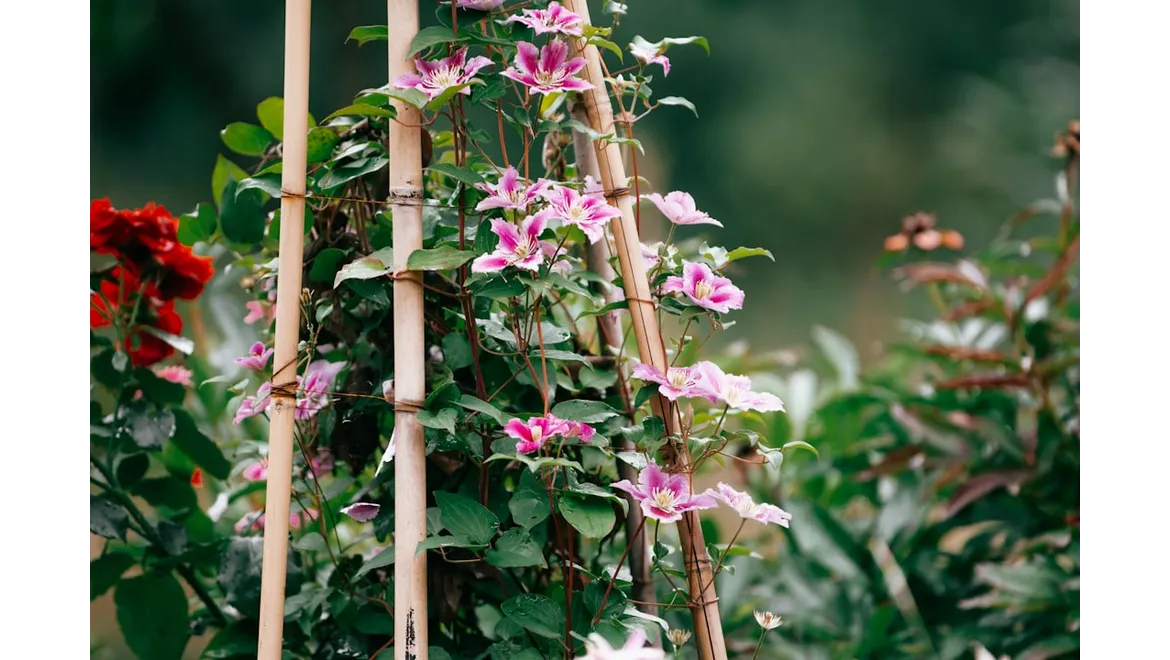
Right, kettle’s on, biscuits at the ready. I caught Matthew in the garden earlier, practically wrestling with a Clematis. Turns out, he was a bit baffled by the whole thing, so we had a proper chinwag about these beautiful climbers. And I thought, what better Plant Profile topic than sharing our chat and helping you navigate the sometimes-confusing world of Clematis? After all, they’re such a fantastic addition to any UK garden, especially framing an orangery entrance!
Clematis Versatility: More Than Just a Pretty Flower
First off, Matthew was surprised by how versatile Clematis are. He’d only ever seen them scrambling up walls. I pointed out they’re brilliant for adding vertical interest in all sorts of ways. Think about scrambling them through established shrubs (roses are particularly good companions), over arches, or even up obelisks in a border. They soften hard landscaping and add splashes of colour at different heights. They really do bring a unique character to a garden, especially when viewed from inside the orangery during less clement weather!
The Pruning Puzzle: Cracking the Code
This is where Matthew was really struggling. He’d heard about different pruning groups and was completely lost. So, I broke it down: There are three main groups:
-
Group 1: These flower on old wood (growth from the previous year). Think early-flowering types like Clematis armandii or Clematis alpina. You barely prune these! Just remove any dead or damaged stems immediately after flowering.
-
Group 2: These are the tricky ones! They flower on both old and new wood. Typically, large-flowered varieties like Clematis ‘Nelly Moser’. The advice is to lightly prune in late winter or early spring, removing any dead or weak stems. Then, after the first flush of flowers, you can cut back some stems by about a third to encourage a second bloom later in the season. Matthew said he was scared of cutting them back at all! But a light trim is essential to stimulate growth.
-
Group 3: These flower on new wood only. This group includes late-flowering types like Clematis viticella and Clematis ‘Jackmanii’. These are the easiest to prune! In late winter or early spring, cut them back hard to about 30cm (1ft) from the ground. Don’t be timid, they’ll bounce back with vigour!
The key takeaway, I stressed, is to identify your Clematis variety and know which group it belongs to. If you don’t know, observe when it flowers and that will provide vital clues. It’s always better to under-prune than over-prune, especially when you’re starting out.
Support Structures: Giving Them a Helping Hand
Matthew’s Clematis was just sort of flopping about. Clematis climb by twining their leaf petioles (the stalks that attach the leaves to the stem) around things. They need something relatively thin to grip onto. Chunky trellises or wide fences won’t work. Netting, wire, or thin bamboo canes are ideal. I suggested a simple wire trellis attached to his fence. Arches also look stunning covered in Clematis, creating a beautiful focal point in the garden, perhaps as a route from the orangery out into the garden.
Location, Location, Location: Sunny vs. Shady
Most Clematis prefer their heads in the sun and their feet in the shade. That means they like at least six hours of sun a day, but their roots should be kept cool and moist. Mulching around the base of the plant with bark chips or gravel helps with this. If you have a particularly shady spot, Clematis alpina or Clematis macropetala are more tolerant of shade.
Clematis Wilt: The Dreaded Disease
Matthew had heard horror stories about Clematis wilt, a fungal disease that can cause stems to suddenly collapse. The good news is, it’s not always fatal. If you spot signs of wilt, prune out the affected stems immediately, cutting back to healthy growth. Good hygiene is crucial, so disinfect your pruning shears between cuts. Improving air circulation around the plant can also help prevent wilt. Some varieties are also more resistant to wilt than others, so do your research when choosing your Clematis.
Bringing It All Together
So, choosing the right Clematis for your location, understanding its pruning group, providing adequate support, and keeping an eye out for problems like wilt are the key things to bear in mind. Don’t be afraid to experiment – Clematis are surprisingly resilient, and the rewards of a beautifully trained and flowering climber are well worth the effort. Enjoy planning your Clematis and enjoy it from your Orangery!